

 Wine insider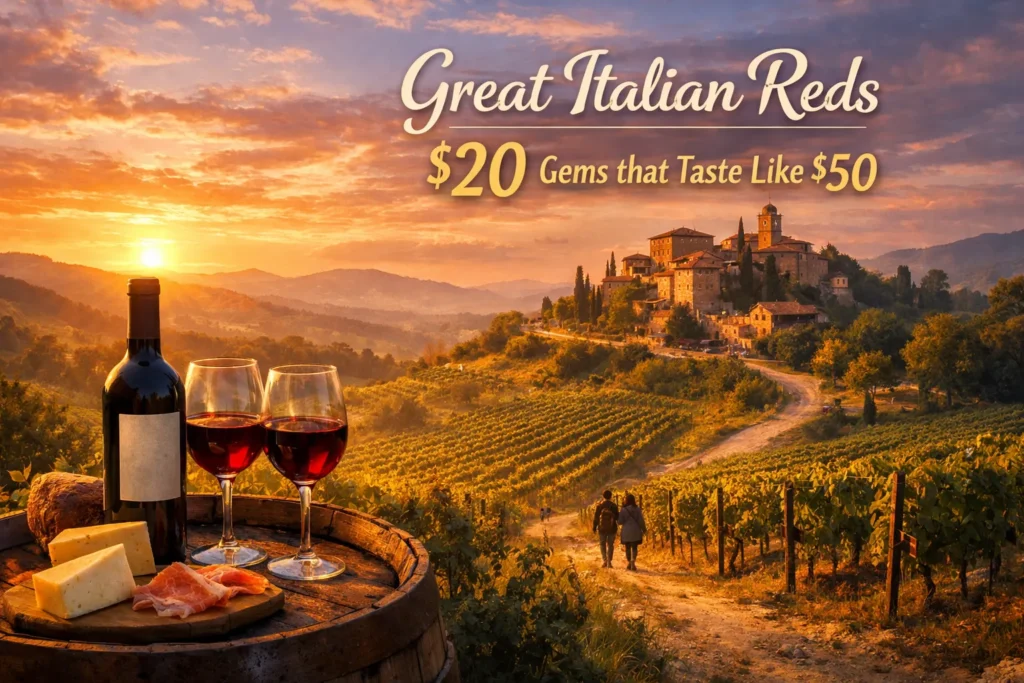
It was one of those tumbling, ordinary evenings: a narrow table, a single candle, and a pan of tomato-splattered pasta. I remember the moment because the bottle was the size of a joke — a $6 Chianti pulled from a grocery run — and the room fell oddly silent after the first sip. There was acidity that mattered, clean cedar-tinged cherry, and a finish that felt purposeful, not apologetic. For twenty minutes no one compared price tags. They compared mouths and memories.
Read this, and you’ll confidently choose 2–3 affordable Italian reds for your next meal — the kind of bottles that arrive without theatrics and leave with applause.
Everyday pizza and pasta: Castellore Chianti (Aldi, ≈$5.99) — tart Sangiovese, razor acidity, immediate comfort.
Guest-impressing elegance: Pietradolce Etna Rosso (Nerello Mascalese, ≈$17.99) — flinty minerality and perfume that read older than the price.
Party, grill, crowd-pleaser: Li Veli Orion Primitivo (≈$14.95) — plush blackberry fruit and rounded tannins that please varied palates.
At Insider Wine Advice we taste dozens of budget bottles every month. These are the ones that kept surprising us — not with marketing bravado, but with real structure, balance and food-friendly chemistry.
Why price lies (and how to spot the truth)
There is a small mental model I use when tasting: Value Masquerade. A wine might wear the clothes of prestige — heavy labeling, “Reserve” typography, a numbered cork — and still be, essentially, commerce. Conversely, a humble bottling from a cooperative or a supermarket case can conceal thoughtful vineyard work and modern cellar craft. Price is production cost plus brand story plus market inefficiencies; pleasure is acid, tannin, fruit, and balance.
Practical reasons for the disconnect are simple. Economies of scale let large houses spread costs and sell attractive, well-made wine cheaply. Techniques that used to be expensive — temperature-controlled fermentation, precise yeast selection, gentle oak touches — are now widely available. Producers in Sicily or Abruzzo can grow ripe fruit at lower cost and focus on clarity rather than the fashion of heavy extraction. Regions ignored by collectors often offer the best value precisely because they haven’t been discovered by critics’ price indices.
Labels confuse more than they clarify. DOCG means tighter rules than DOC, but it’s a guarantee of specific origin and method, not a promise of greater pleasure. “Riserva” signals extra aging, not automatic quality. Instead of reading the label for status, read the bottle for signals: Is the wine described as a grape (Sangiovese) or a vague “Toscana Rosso”? Does the producer list a subzone? Those are clues; they aren’t verdicts.
At the shop, trust what you can assess quickly: clarity of style (does the wine say “lean and tart” or “jammy” on the label?), acid presence (great with food), and a honest sense of balance. Ignore packaging theatrics. The person who frequently opens bottles will tell you: price is a hint, not a script.
How Insider Wine Advice chose these 12
We applied a short, rigorous checklist and then put our palates to the test. The rules were: retail price under $20 in the U.S., consistent praise from critics or users, reasonable availability, varietal and regional diversity, and — crucially — food-friendliness. We value wines that make a meal better, not just a table look fancier.
Our method combined blind side-by-side tasting against pricier bottles, cross-checking crowd data on Vivino and critic notes where possible, and then pairing each selection with everyday dishes: pizza, braise, grilled steak, mushroom risotto. Bottles that performed on their own and amplified the food moved to the final list.
We excluded three types: unstable boutique labels that appear and disappear by vintage, wines whose retail prices fluctuate wildly, and bottles that taste grand solo but collapse alongside food. The result is a group you can find or reliably substitute and use in real-world settings.
Reader promise: these picks are repeatable, easy to source (or have a close alternative), and chosen to make meals better, not to feed your spreadsheet of collector vanity.
A compact grape-and-region map: what to expect
Sangiovese (Tuscany, Chianti/Brunello family): Think tart cherry, tomato leaf, tobacco and a spine of high acidity. Its energy makes it the classic match for tomato-based dishes; Sangiovese often tastes more expensive when it has crisp acidity and firm structure.
Montepulciano d’Abruzzo: Darker fruit and supple tannins, often midweight and savory. Good Montepulciano shows plum, black cherry, and a touch of earth — it pairs effortlessly with roast pork and meaty pastas.
Nero d’Avola (Sicily): Warm, bold fruit and Mediterranean herbs; full mouthfeel with spice. When grown well, it delivers rich fruit and complexity that read richer than their price tag, ideal for grilled meats.
Aglianico (Campania/Basilicata/Puglia): Firm tannins and a smoky, mineral backbone. Aglianico’s natural structure gives the impression of seriousness and longevity; it loves braises and robust pizzas.
Barbera and Dolcetto (Piedmont): Barbera brings bright acidity and sour cherry brightness; Dolcetto is fruit-forward and immediate. Both are inexpensive ways to access Piedmont’s finesse for antipasti and mushroom dishes.
Nebbiolo and Nerello Mascalese (Langhe / Etna): Light in color but tannic and perfumed. Nebbiolo personality — rose petal, tar, dusty tannin — translates into elegance; Nerello Mascalese often brings volcanic minerality and surprising refinement.
Primitivo (Puglia): Jammy, high-alcohol, plush tannins. It’s the crowd-pleaser: big fruit that matches grilled or spicy foods without feeling like an argument.
Quick cheat—Acidity Anchor: For tomato or salad-rich dishes, choose higher-acid wines (Sangiovese, Barbera). For fatty meats choose tactile tannin (Aglianico, Montepulciano). For spicy or charred flavors, reach for fruit-forward Primitivo or Nero d’Avola.
The 12 Italian reds under $20 that consistently taste pricier
Each entry below includes a tasting snapshot, why it punches above its price, best pairings, an approximate U.S. price and where to look, plus a nearby alternative.
Castellore Chianti DOCG (Aldi, ≈$5.99)
Tasting snapshot: Bright tart cherry, dried herbs, firm acidity and a lean, honest finish. Why it feels pricier: textbook Sangiovese backbone and refreshing focus. Best with: tomato pizza, roasted vegetables, simple ragù. Where to find: Aldi (often seasonal); similar Chianti DOCG options run $7–$12. Alternative: Cultusboni Cetamura.
Cultusboni Cetamura Chianti DOCG (≈$9)
Tasting snapshot: Ripe red fruit, a hint of oak spice, clean tannins. Why it adds value: organic farming and fidelity to Sangiovese structure. Best with: grilled sausage, cacio e pepe, aged Pecorino. Where to find: specialty retailers and select online shops.
Il Bastardo Rosso di Toscana (≈$8–$12)
Tasting snapshot: Juicy Sangiovese-driven fruit, straightforward and charming. Why it outperforms price: crowd-pleasing intensity and balance. Best with: weeknight pasta, meatballs, charcuterie. Where to find: regional grocery and online independent shops.
Frescobaldi Remole Toscana Rosso (≈$9.95)
Tasting snapshot: Tuscan blend with ripe dark fruit, balanced tannic frame. Why it tastes richer: provenance from a well-regarded house yields polish. Best with: roast chicken, tomato-based pasta, grilled vegetables. Where to find: wide retail distribution and online.
Cantina Zaccagnini Montepulciano d’Abruzzo (≈$15.95)
Tasting snapshot: Plummy fruit, supple tannins, savory, earthy finish. Why it feels more expensive: approachable texture and classic Italian earthiness. Best with: braised beef, lasagna, aged cheeses. Where to find: Total Wine, wine shops, online retailers. Alternative: other high-quality Montepulciano d’Abruzzo from regional co-ops.
Epicuro Aglianico Puglia (Trader Joe’s, ≈$5.99)
Tasting snapshot: Firm tannins, smoky spice, a throat-coating finish — perfect for pizza. Why it punches up: Aglianico’s natural structure reads weightier and more complex. Best with: wood-fired pizza, grilled lamb, tomato-rich ragù. Where to find: Trader Joe’s (regional availability).
Rosa Dell’Olmo Langhe Nebbiolo (Trader Joe’s, ≈$9)
Tasting snapshot: Red roses, tart cherry, dusty tannins — Nebbiolo personality on a budget. Why it surprises: Nebbiolo’s perfume and tannin evoke higher-priced Langhe bottles. Best with: mushroom risotto, truffle pizza, hard cheeses. Where to find: Trader Joe’s and select indie stores.
Pietradolce Etna Rosso (Nerello Mascalese, ≈$17.99)
Tasting snapshot: Flinty minerality, bright cherry, delicate spice — Etna elegance. Why it tastes pricier: volcanic soils and restraint in extraction produce nuance. Best with: roasted meats, tuna steak, grilled vegetables. Where to find: specialty wine shops and online; check small-batch listings for vintage.
Tabarrini Boccatone Montefalco Rosso (≈$19.99)
Tasting snapshot: Grippy tannins balanced with cherry, walnut and savory herb notes. Why it’s a steal: Montefalco tradition and complexity rival pricier blends. Best with: osso buco, aged pecorino, hearty ragù. Where to find: independent wine shops and select online retailers.
Tasca d’Almerita Nero d’Avola (≈$18–$20)
Tasting snapshot: Dense dark fruit, licorice, Mediterranean herb note. Why it feels upscale: concentrated fruit backed by savory complexity. Best with: grilled red meats, spicy sausage, robust tomato sauces. Where to find: mainstream wine retailers and online.
Li Veli Orion Primitivo (≈$14.95)
Tasting snapshot: Ripe blackberry, vanilla, plush texture and round finish. Why it overdelivers: sun-ripened fruit profile reads richer and more generous. Best with: barbecue, burgers, spiced tomato dishes. Where to find: online retailers and major wine shops.
Kazana Barco Reale di Carmignano (Sangiovese-Cabernet blend, ≈$17)
Tasting snapshot: Sangiovese lift with Cabernet backbone — smooth, structured and velvety. Why it feels expensive: blending restraint and careful oak management yield polish. Best with: steak, roasted mushrooms, tomato-based stews. Where to find: selected retailers and online marketplaces.
Note: prices and availability shift; check retailer sites or our curated buy lists at Insider Wine Advice for current stock and alternatives.
Pick 2–3: quick shopping prescriptions for four occasions
Match the meal’s intensity to the wine’s body and tannin. For tomato-forward or lighter fare, pick higher-acid Sangiovese/Barbera. For fattier or spicy dishes, choose Montepulciano, Primitivo or Nero d’Avola. For elegance and guests, choose Nebbiolo/Nerello Mascalese.
Pizza & casual Italian: Castellore Chianti and Epicuro Aglianico. The Chianti brings acidity to cut the tomato; Aglianico brings chewy structure for charred crust and sausage.
Weeknight pasta & family dinners: Frescobaldi Remole Toscana and Cantina Zaccagnini Montepulciano. Both offer approachable fruit and structure without demanding decanting — forgiving with leftovers.
Date night / impressing guests: Pietradolce Etna Rosso and Tabarrini Boccatone. These show nuance and perfume that read older and more refined than their price, ideal alongside composed dishes.
Crowd pleaser / party: Li Veli Orion Primitivo and Tasca Nero d’Avola. Both are fruit-forward, generous and immediate — they disappear quickly at gatherings.
Starter pack suggestion: buy one bright Sangiovese (Chianti), one southern heavyweight (Primitivo or Aglianico), and one elegant Etna/Nebbiolo-style bottle. That trio covers most meals, guests and moods.
Where to buy and how to score the best deals
Retail playbook: Hunt Aldi and Trader Joe’s for surprise bargains and everyday staples. Use Total Wine or Wine.com when you need selection and stock-checking. Vivino and best places to buy wine online are useful to compare prices and track historical pricing — they help you avoid paying a retailer’s temporary markup.
Shipping & legal note: U.S. shipping varies by state; some states restrict direct-shipper options and require in-state retailers. Expect signature-on-delivery for alcohol in many jurisdictions and variable shipping fees; large orders often trigger free shipping thresholds.
Money-saving tactics: buy on sale, join store memberships, buy by the case when discounts apply, follow press drops (holiday sales) and subscribe to curated lists from Insider Wine Advice. If a wine seems too scarce or a single vintage is wildly different in price, prefer a steady producer or a known cooperative bottling.
What to avoid: the restaurant bottle markup — what’s $12 retail often costs $45 at dinner. Avoid one-off auction or “single-vintage hype” labels with no distribution history unless you’re collecting rather than drinking.
Serve, taste and pair like a pro — small tricks that upgrade budget bottles
Temperatures: lighter reds (Sangiovese, Nebbiolo, Nerello Mascalese) are best at 55–60°F; fuller-bodied reds (Primitivo, Nero d’Avola, Montepulciano) at 60–64°F. Slight chill sharpens acidity and highlights perfume in lean reds.
Decanting/aeration: Young, tannic bottles (Aglianico, Montepulciano) benefit from 30–60 minutes of air; most of the affordable picks open nicely with 10–20 minutes. Quick aeration techniques — pour into a wide glass, swirl vigorously, or use a small aerator — often give immediate returns.
Glassware: use a medium-large red glass for most of these bottles; reserve very large Bordeaux bowls for the tannic heavyweights. Clean, clear glass matters more than fashion.
Pairing heuristics: acid = tomato; tannin = fattier meats; fruit-forward = spicy/charred foods. Match weight to weight. Example micro-recipes: a simple Marguerita pizza with Castellore Chianti; braised short ribs with Cantina Zaccagnini Montepulciano; mushroom risotto with Rosa Dell’Olmo Langhe Nebbiolo.
Tasting exercise: try the three-sip method — first scent the glass, then take a small balancing sip to register acidity and texture, then a longer swallow to note the finish. For cheap-but-good reds look for: clean acidity, a balanced mid-palate, and a finish that repeats fruit or spice rather than collapsing into alcohol.
Storage tips: once opened, re-cork and refrigerate; most of these wines keep 3–5 days. For short-term cellaring, store bottles on their side at ~55°F if possible; avoid heat, vibration and bright light.
Final checklist, quick reference and how Insider Wine Advice can help
- Price band: under $20 — aim for $6–$18 for everyday value.
- Grape/region match: pick Sangiovese for tomato dishes; Primitivo/Nero d’Avola for grilled meats; Nebbiolo/Nerello for elegance.
- Acidity/Tannin: match acidity to sauce; tannin to fat.
- Vintage note: prefer recent stable vintages (last 2–4 years) for budget bottles.
- Retailer/price check: compare Trader Joe’s/Aldi for bargains, Wine.com/Total Wine for selection.
- Buy one, test at home: purchase a single bottle, pair it with a meal, and use that experience to inform your next choice.
Quick recap: for most readers the immediate three buys are Castellore Chianti (everyday pizza/pasta), Pietradolce Etna Rosso (guest-impressing nuance), and Li Veli Orion Primitivo (party-friendly, bold fruit). They represent acidity, elegance and generosity — the three axes you need for confident dinner choices.
If you’d like a personalized starter list, Insider Wine Advice can craft a three-bottle pack matched to your palate and budget, or provide curated lists, private tastings and gift recommendations tailored to the occasion. We translate cellar theory into what actually tastes good with the food you cook and the people you share with. See our lists of top rated red wines under $30 and top rated white wines under $30 for additional ideas.
There is a small truth to hold: wine is a translator between a season, a place, and a meal. Price tells a story about market mechanics; the glass tells the honest story. Taste widely, trust the moment you enjoy, and remember that sometimes the happiest wine is the one you uncork and share.
[…] 12 Italian Reds Under $20 That Taste Like $50 Bottles […]
[…] you’re exploring budget reds beyond California, we also have a complementary guide to 12 Italian Reds Under $20 That Taste Like $50 Bottles, which can be a great point of comparison when hunting […]