

 Wine insider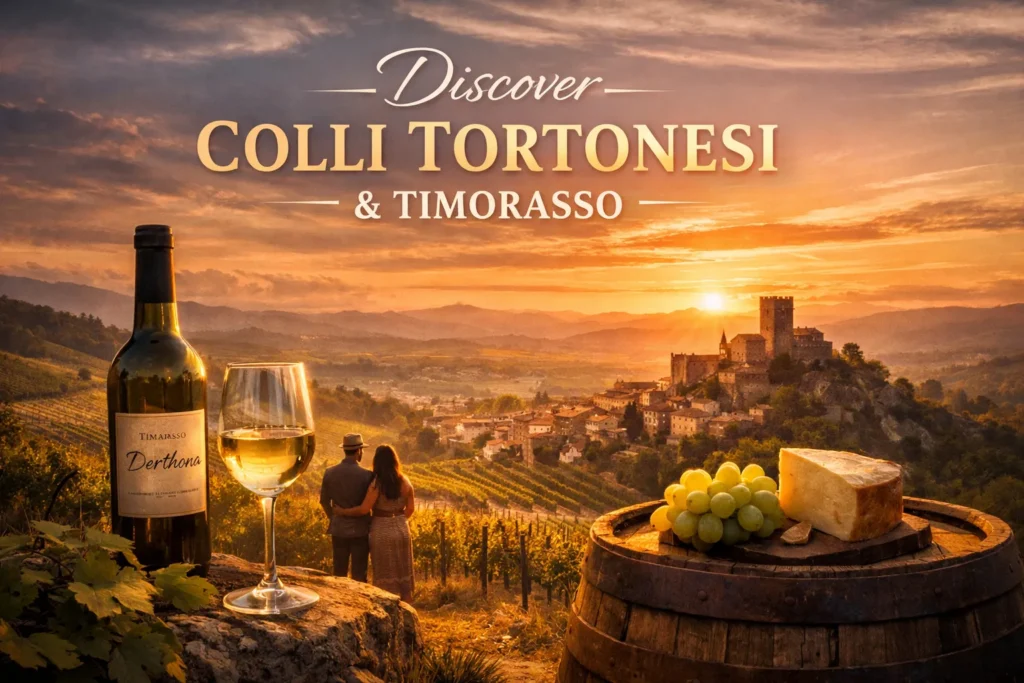
Introduction
A low ridge in the Tortona hills. Wind that feels like salt and stone. You uncork a bottle and for a moment the aroma confuses you: citrus and crushed limestone, yes—but then a thin thread of petrol, that strange, thrilling kerosene note that feels both fossil and floral. It is the paradox of Timorasso: a white grape that smells like time and tastes like the landscape that raised it.
This is a revival story as much as it is a tasting note. The hills around Tortona—ancient Dertona—were once known for white wines that traveled across borders; then a century of phylloxera and rural abandonment reduced those vineyards to a faint memory. In the last few decades the grape has come back with a quiet insistence, and today the Tortona hills produce some of Piedmont’s most interesting whites.
By the time you finish this piece you will be able to point to these hills on a map, read a bottle from the region without guessing, taste Timorasso like someone who hears structure, and choose sensible bottles at different budgets. We at Insider Wine Advice have been following these slopes since Timorasso’s first modern uncorkings—consider this your field guide: practical, story-rich, and aimed at making your next bottle a discovery rather than a gamble.
Where the Tortona hills live: a mental map and the soil beneath your feet
The Denomination sits as a compact arc of hills southeast of Alessandria, focused on the town of Tortona. The official zone covers roughly 1,800 hectares across about 47 municipalities; it is a crossroads where Piedmont meets Lombardy, Liguria and Emilia-Romagna. Imagine three or four small valleys slotted together like tiles: the Scrivia–Curone–Grue chain running through the area’s heart, the Ossona–Borbera–Spinti corridors to the east, and scattered sub-areas such as Monleale and the Terre di Libarna near the Ligurian edge. Those names are the address lines a producer will put on a label.
Underfoot the earth tells the story in marls, clay-limestone blends and alluvial slopes—Miocene marine deposits that left bands of calcareous clay and blue marl. The tectonics around the Villalvernia-Varzi alignment have created abrupt transitions between soils, which in turn produce the high-acid whites that define the region. Climate is continental, but the Apennine and Ligurian influences temper extremes: warm, airy summers and cool nights that preserve acidity. The result is a grape that develops ripeness without losing its mineral backbone.
For the editor or curious reader: place an authoritative map near this paragraph—either the Consorzio Tutela Vini Colli Tortonesi map or the Italian Ministry of Agriculture DOC map. An inline graphic showing the 47 communes with callouts for Tortona, Monleale and Terre di Libarna will orient anyone new to the region.
Quick take: Three ways to spot the Colli di Tortona on a map — look for Tortona at the center, trace the chain of Scrivia/Curone/Grue valleys, and note the borderlands with Lombardy, Liguria and Emilia-Romagna.
Dertona to Derthona: how Timorasso went from everywhere to almost nowhere and back
History collapses into a single bottle here. Romans planted vineyards around Dertona; medieval agronomists praised the white wines of Tortona as exceptional. By the 18th and 19th centuries the area produced wines—often sold as Torbolino—that found markets in Switzerland and Germany. Then phylloxera, socio-economic change and rural flight hollowed out those vineyards. Timorasso, a demanding variety, nearly disappeared.
The modern renaissance belongs to stubborn curiosity. In the 1980s a handful of growers began to believe in the grape again. Walter Massa fermented a first trial batch in 1987; through perseverance and single-vineyard attention he bottled Costa del Vento in the 1990s and became the figure most often credited with catalyzing the revival. Other early adopters—Enio Ferretti and a cluster of local growers—followed. Around 2000 producers began promoting the historical name Derthona (a nod to ancient Dertona) as a way to brand their Timorasso wines.
Why do some grapes survive the sweep of time while others vanish? The answer is rarely genetic alone. Timorasso’s comeback combined a terroir that rewards attention, advocates who were willing to invest time and money, and a market that began to prize distinctive white wines. The cultural persistence of a grape is as much about people as plants.
Why it matters: Timorasso’s recovery has shifted perceptions in Piedmont—some critics now speak of white wines with the ambition and aging potential once reserved for the region’s reds.
Decoding the DOC: what the label can tell you
Reading a bottle from the Tortona hills becomes an exercise in practical semiotics. The DOC allows a broad palette of varieties, which is why a shelf of local wines can include everything from indigenous Timorasso to international whites and a generous selection of reds.
White grapes permitted under the discipline include Timorasso, Cortese, Favorita, Müller-Thurgau, Pinot Bianco and Pinot Grigio, Riesling Italico, Chardonnay and others. Reds include Barbera, Croatina, Nebbiolo, Dolcetto and Pinot Nero among several varieties. Varietal labels generally require a high percentage of the named grape (rules typically demand 85% or 95%, depending on the wine); the remaining portion may be another approved variety. The DOC also recognizes sparkling and frizzante styles, rosé (Chiaretto), and Riserva categories for selected wines, while the Terre di Libarna subzone carries its own distinctions for elegance and sometimes for sparkling expressions.
On the shelf, these visual cues matter more than marketing blurbs. If the label reads Derthona or Timorasso, you are very likely dealing with the native white of the hills; if it says Colli Tortonesi Bianco, expect a blend. ‘Frizzante’ indicates a spritzy style; ‘Spumante’ denotes full sparkling. ‘Riserva’ flags extended aging—check the producer or the DOC regulation for exact months. Producer name and vineyard site are reliable keys: single-vineyard mentions usually mean concentration and lower yields.
Legal caveat: precise thresholds for varietal percentages, aging months for Riserva labels, and yield limits are specified in the discipline approved by the Italian agriculture ministry. Consult the Consorzio or the Ministry’s gazette for the regulatory text. For a concise region overview you can also consult a Colli Tortonesi DOC summary online: Colli Tortonesi DOC overview.
Timorasso decoded: what it smells like, how it ages, and the styles to expect
Timorasso is not a single fingerprint; it is a spectrum framed by winemaking choices and site. Young, stainless-steel-fermented Timorasso tends toward bright citrus—lemon, lime—overlaid with stone fruit like peach and apricot, white flowers and a clear mineral spine. Many wines show almond or marzipan and a herbal thread—fennel or anise—that keeps the palate animated. The acidity is incisive: think vertical energy rather than plush ripeness.
With oak or bottle age the wine accrues secondary and tertiary layers: beeswax, hazelnut, honeyed notes, and that celebrated kerosene/peat whisper that links Timorasso to older Rieslings — a characteristic explored in profile pieces on the variety for readers seeking context: Timorasso (Derthona) profile. Oak-aged bottles often gain texture and width; amphora or skin-contact trials add phenolic grip and perfume complexity. Vineyard yield, canopy management and harvest timing tilt a wine toward lean minerality or toward broad texture and orchard fruit.
Service matters. Use a stemmed glass with good volume; serve young, fresh styles around 10–12°C and richer, aged bottles slightly warmer, 12–14°C. Older, more evolved bottles benefit from gentle airing—15 to 45 minutes depending on age; cellared veterans may need a longer rest. A three-bottle flight (fresh stainless, oak-textured 2–5 years old, and an 8–12-year-aged example) will show the arc of the variety better than any single tasting note.
Food pairing is exuberantly easy: seared scallops or lobster accept Timorasso’s zip; porcini risotto matches its forest-toned tertiary notes; herb-roasted chicken and lightly spiced Thai or Indian dishes handle its acidity and perfume. Mid-aged examples pair beautifully with nutty, creamy cheeses.
Memory aid: If it smells faintly of petrol and tastes of lemon-marzipan with chalky mineral finish, you’re likely in Timorasso territory.
Producers and bottles: Insider Wine Advice’s picks at every price point
Below are practical purchase ideas organized by budget band. Prices in the U.S. can vary by vintage, importer and state—treat ranges as guides, not guarantees. If a bottle is rare, check Wine-Searcher or contact the producer; many small estates sell directly in limited quantities.
- Entry / Everyday (under ~$25): Cantina di Tortona — cooperative-driven Timorasso bottlings that introduce the grape’s citrus-mineral character without a high ticket; look for basic Derthona-labeled or Colli Tortonesi Bianco Timorasso releases. These are drink-now wines for weekday meals. For readers interested in value-focused lists for other categories, see our own guide to12 Italian Reds Under $20.
- Value-minded (~$25–$45): Vigneti Repetto (Derthona Origo, Quadro) — structured and food-friendly; Mandirola — herbal and precise; Francesco Iandolo — serious, often showing depth at accessible prices. These wines reward short cellaring but are enjoyable young.
- Serious / Mid (~$45–$80): Claudio Mariotto (Pitasso, Bricco San Michele) — layered, age-capable wines often recognized by Italian guides; select single-vineyard bottlings that balance tensile acidity with tertiary development.
- Collector / Top-tier ($80+): Walter Massa (Costa del Vento and single-vineyard cuvées) — the benchmark of modern Timorasso; La Colombera (Elisa Semino) — highly regarded, long-lived expressions. These are cellar wines with the structure to evolve for a decade or more. Several producers and bottlings from the area have been highlighted in wider Italian rankings — see one selection of top Timorasso wines by an Italian guide:Gambero Rosso’s list of the best Timorasso wines.
Buying tips: search Wine-Searcher for cross-retailer price comparisons; contact producers directly for small-lot releases; ask retailers for importer names where possible. Insider Wine Advice can help curate a purchase list if you are targeting a particular vineyard or building a small Timorasso cellar—our service focuses on sourcing and pairing recommendations that fit taste and budget.
Label clues to trust: an explicit Derthona/Timorasso designation, vineyard site, vintage, and Riserva or single-vineyard notes usually indicate higher intention and lower yields.
How to taste, compare and remember Timorasso: practical exercises and a simple mental model
Learning a grape is a deliberate, replicable act. Two flights teach more than random sips: a vertical of a single producer across three vintages reveals development; a horizontal of three producers from the same vintage reveals stylistic choices (stainless, oak, amphora).
Suggested flights: a three-vintage vertical from a producer like Walter Massa or Claudio Mariotto; a horizontal of Claudio Mariotto, Vigneti Repetto and La Colombera from the same year to test texture and minerality across terroirs.
Adopt a compact mental model: the Four Acts of Timorasso. Act One, Freshness: measure acidity and vibrancy. Act Two, Fruit: citrus vs stone fruit vs orchard fruit. Act Three, Texture: the weight and phenolic or oak-derived grip. Act Four, Mineral & Tertiary: the kerosene, hazelnut, beeswax and finish. Score each axis on a 1–10 scale in your notes. This framework focuses attention and makes differences reproducible.
When you taste, write down aromatics first, then palate energy, then finish length and any age signals. Anchor Timorasso against two comparative wines in blind tests: a sharp Chablis (unoaked Chardonnay) for minerality and acidity, and a mature Chenin Blanc for tertiary complexity. For another example of a modern unoaked Chardonnay comparison, readers can contrast a bottle like the California Heritage Chardonnay discussed in one of our tasting guides. Ask: where is the acidity? Where is the mineral impression? Which wine holds its shape through the finish?
Practice plan: taste three Timorassos within a month—one entry-level, one mid-range, one older bottle—apply the Four Acts, and compare notes. The difference will be clearer than you expect. If you’re curious about contrasting red styles for broader tasting context, see our piece on 12 Mendoza Reds to Know for examples of structure and value in red wine.
Planning a visit and cellaring: how to convert curiosity into a trip or a small collection
Logistics are straightforward but not automatic: the closest international gateways are Milan’s airports (Malpensa or Linate) and Genoa. From Milan you can reach Tortona by train or a one-hour drive depending on connections; renting a car or arranging a local driver is the simplest way to visit multiple small estates. Many producers require appointments—call or email ahead, and bring a list of specific wines you want to taste.
Suggested one-day itinerary: morning in Tortona for a walk and local history; a mid-morning stop at Cantina di Tortona for context; lunch at an osteria with agnolotti; an afternoon visit to a small estate such as Claudio Mariotto or a producer like Mandirola; finish in town for dinner. A 2–3 day trip adds Monleale and a Terre di Libarna estate, giving you varied soils and stylistic contrasts.
What to eat locally: agnolotti, robiola di Roccaverano where available, river fish, porcini or mixed forest mushrooms, and simple charcuterie—these dishes accentuate the wines’ acidity and mineral tones.
Buying on-site versus online: small estates sometimes reserve their top lots for direct sales; producers may limit shipping internationally. For U.S. buyers, check importers and use online resources to identify domestic stock. If a bottle is rare, a direct producer inquiry or a curated purchase list will often uncover available allocations. Insider Wine Advice offers targeted sourcing and purchase-list curation if you need help locating a specific vintage or planning a small cellar strategy.
Cellaring notes: store bottles at a steady 10–12°C (50–54°F) with about 60–70% humidity, horizontally, away from light and vibrations. Young, stainless-steel Timorasso drinks well within 1–3 years; textured, oak-aged and top-tier bottles reward 5–15 years of aging, sometimes longer. When serving older bottles, open gently and allow 30–60 minutes of breathing; decant only if you encounter reduction or a compressed bouquet.
Etiquette for small-cellar visits: book ahead, be punctual, be clear about whether you intend to buy, and understand that tasting fees may be offset by purchases.
Conclusion
The story of the Tortona hills is geological and human: marine marls, faulted slopes and a grape that sits between citrus and kerosene, and a handful of people who refused to let it vanish. You can now point to the hills on a map, read a label with confidence, taste Timorasso through the Four Acts, choose a bottle at your price point, and plan a trip with clear expectations.
If you want a one-page quick guide (map plus tasting checklist) or a tailored buying list for Timorasso to fit your cellar or dinner table, Wine recommendation resources and curated recommendations are available from Insider Wine Advice. Tonight, pick a Timorasso—open it slowly—and let a landscape speak through glass.